
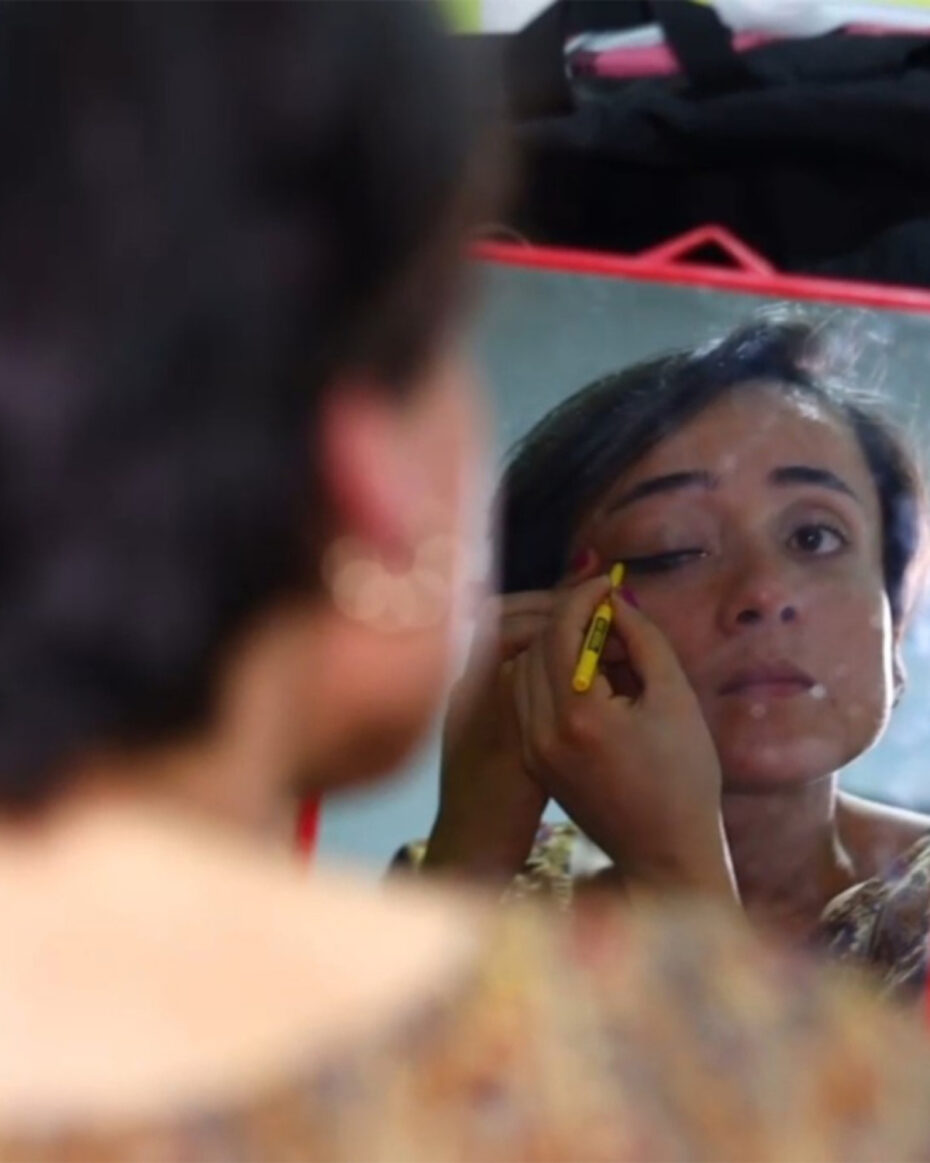
Photo: Burcu Özkaya Günaydın
Stories
The Hair Salons Helping the Women of Antakya Feel Like Themselves Again
Can getting a beauty treatment actually help women process trauma and grief after a disaster on this scale? The documentary Araf sits with that question, following the women of Antakya through grief, survival, and the slow work of rebuilding their lives after the earthquake. We talk to director Burcu Özkaya Günaydın about self-care as a form of resilience, the city's deep-rooted salon culture, and why beauty became an unexpected lifeline.
Text Seda Yılmaz
A blowout, a fresh hair color, a set of gel nails. In Araf, these are the things that carry women through. Director Burcu Özkaya Günaydın documents the container hair salons and makeshift beauty studios that emerged across Antakya after the earthquake. There, in the middle of so much loss, women gather to color their hair, get gel manicures, share stories, and, for a moment, feel like themselves again. The film captures both the heartbreak and the hope inside these small acts of care.
How did this documentary come about, and what led you to focus on hair salons and beauty spaces in Antakya?
I’ve been working as a freelance journalist in Antakya since 2018, and I was here when the earthquake struck. It was devastating in every sense of the word. I spent four months in a tent and another year and a half in a container house.
A few months after the earthquake, my journalist friend Mehveş Evin came to visit. When she asked what she could do for me, my answer was simple: I wanted to go to the hairdresser. We drove to Samandağ together, where a local stylist had dragged a dresser, a mirror, and a chair out from her collapsed building and set up shop right on the street. While I was getting my hair cut, women kept coming by. Some were having their eyebrows done, others were getting their hair styled. A few broke down in tears as they talked about the people they’d lost. That’s when the idea first came to me.
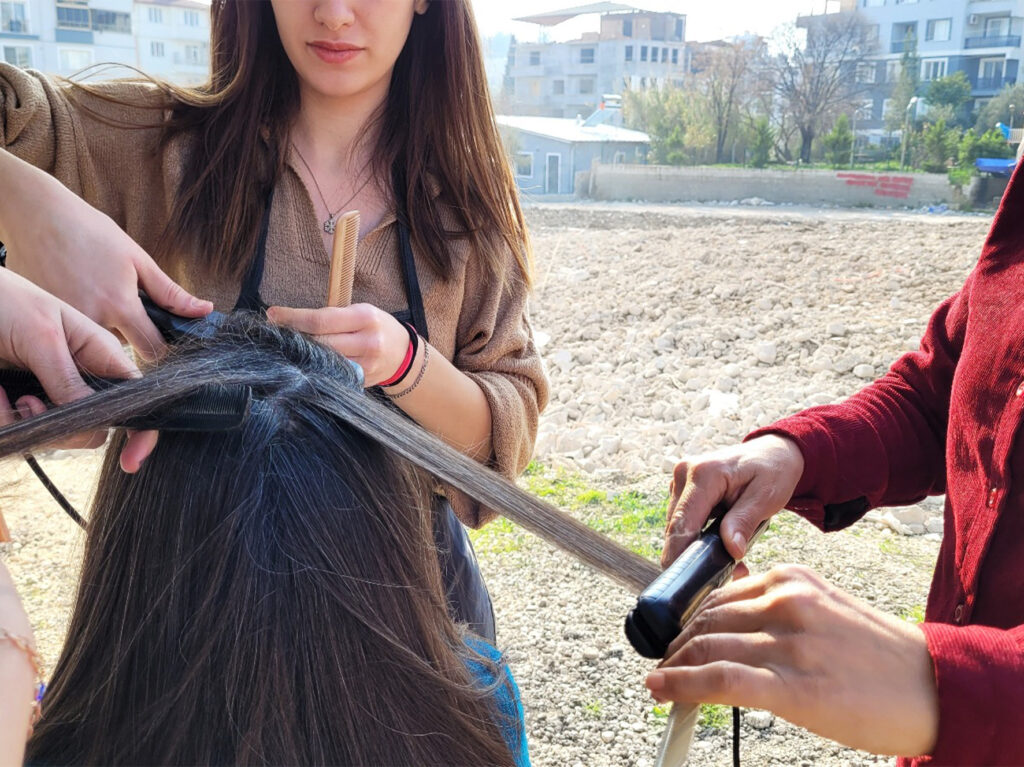
A makeshift beauty space in the tent settlements.
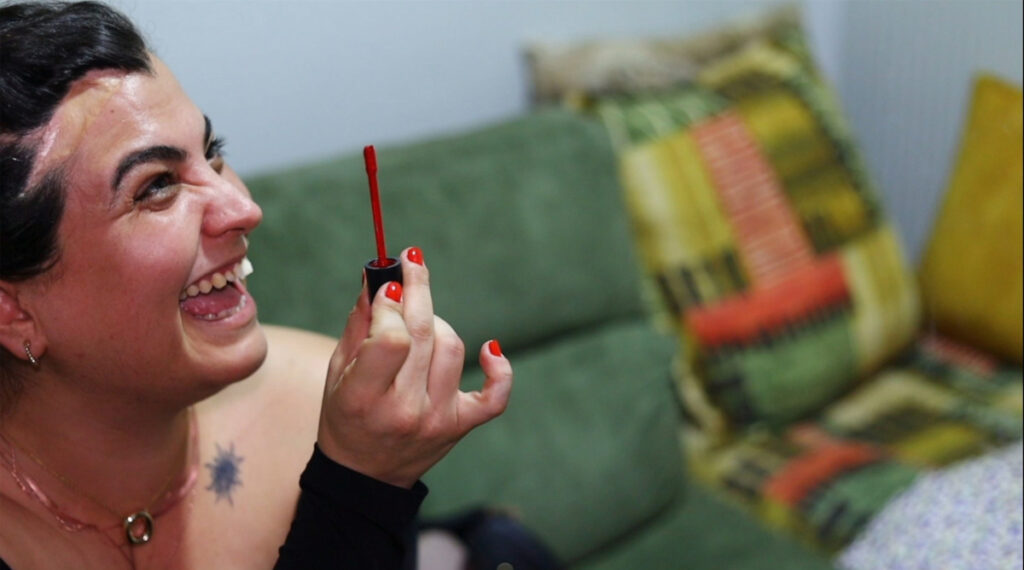
A quiet moment of joy, marked by a swipe of red lipstick.
 Previous
The documentary opens with a woman putting on red lipstick as scenes of destruction unfold around her. Throughout the film, beauty routines become part of how women get through what they’re facing. Sometimes it’s a blowout that lets someone forget, even for an hour. Sometimes it’s a new hair color that feels like turning a page. Did you expect to see that after the earthquake?
I don’t think I would have expected it. Then again, when I first moved here from Istanbul, I was struck by how many salons existed in every single neighborhood. There’s a strong culture of beauty and self-care in Antakya, and you see that throughout parts of Syria and Lebanon as well.
Not long after the earthquake, makeshift salons started popping up in the tent settlements. They quickly became more than places to get your hair done. People wanted a reason to gather, to feel normal again, to have something to look forward to. I started noticing something else: women were lining up for gel manicures. Imagine living in a tent under incredibly difficult conditions and still wanting to have your nails done. That really stayed with me.
“Groups of women, ten or fifteen at a time, would come in together for microblading, lash lifts, gel nails. I see them as part of healing, part of reclaiming something that felt like normal life.”
Araf portrays hair salons as important gathering spaces for women. How were women showing up for one another in these spaces?
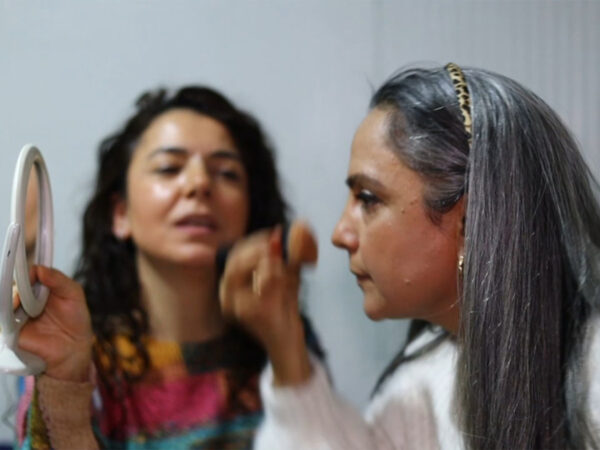
One nail artist told me that women living farther away would call her and say, “Life is hard enough already. This makes us feel better.” Groups of women, ten or fifteen at a time, would come in together for microblading, lash lifts, gel nails. I see them as part of healing, part of reclaiming something that felt like normal life.
Grief is such a personal thing. I’ve always believed people grieve as individually as a fingerprint, no two the same. I used to find the tradition of making halva in a house of mourning somewhat ironic. Living through the aftermath of this earthquake showed me that those rituals, all of them, are really just ways of insisting on life.
What role did beauty and self-care play in your own life during that period?
I’ve always been into self-care. Washing my hair properly wasn’t really an option during those months, so I survived on dry shampoo. Whenever friends came to visit, I’d ask them to bring some with them. I ended up with bottles stacked inside my tent.
A Korean journalist got in touch before coming to Antakya for a story. When she arrived, she brought dry shampoo, moisturizer, and sheet masks with her. One day, right after getting my hair cut, I decided to take a little break. I put on one of the sheet masks, pulled a chair outside the tent, and just sat there. I couldn’t have been happier.
Some of the women in Araf talk about being judged or criticized for getting dressed up, for taking care of themselves. Why do you think that is?
People tend to associate going to the salon with happiness. There’s also a pretty fixed idea of what an earthquake survivor is supposed to look like. So when someone doesn’t match that image, it becomes something people question. “How can someone who’s been through the earthquake look like this?” Then, of course, there’s the way women are viewed in general. A woman’s hair, her makeup, her appearance all become things people feel entitled to comment on.
In the third year after the earthquake, I interviewed a woman living in a container house. She was heavily criticized online simply because her hair was dyed, and eventually asked me to take the video down.
During a severe water shortage, I remember one interview where a woman’s polished nails suddenly became the focus. She was speaking about living without water in the summer heat, while comments came in saying things like, “Instead of painting your nails, you should have found water.”
“Not long after the earthquake, makeshift salons started popping up in the tent settlements. They quickly became more than places to get your hair done.”
Was it difficult to convince women to take part in the documentary?
I didn’t know a single woman at the first salon we filmed. Right before we started shooting, some of them hesitated and almost backed out. “So many people died. Why are you making a film about hair salons?” they asked. I tried to explain that I was looking at what was helping women get through this time, and asked them why they had come to the salon that day. One of them said, “When I get a blowout, I feel better.” The conversation grew from there.
The women getting ready for a night out in the film are my friends. We lived in the same container settlement for a year and a half, so I’m used to seeing them like this, doing their hair and makeup before going out. It all feels very familiar.
The woman with cancer, who I filmed at several locations, is one of my closest friends. After her surgery in Ankara, the very first thing she did when she got back to Antakya was go get gel nails. I’ll never forget what she said: “My nails are the only thing that still makes me feel like a woman.”